


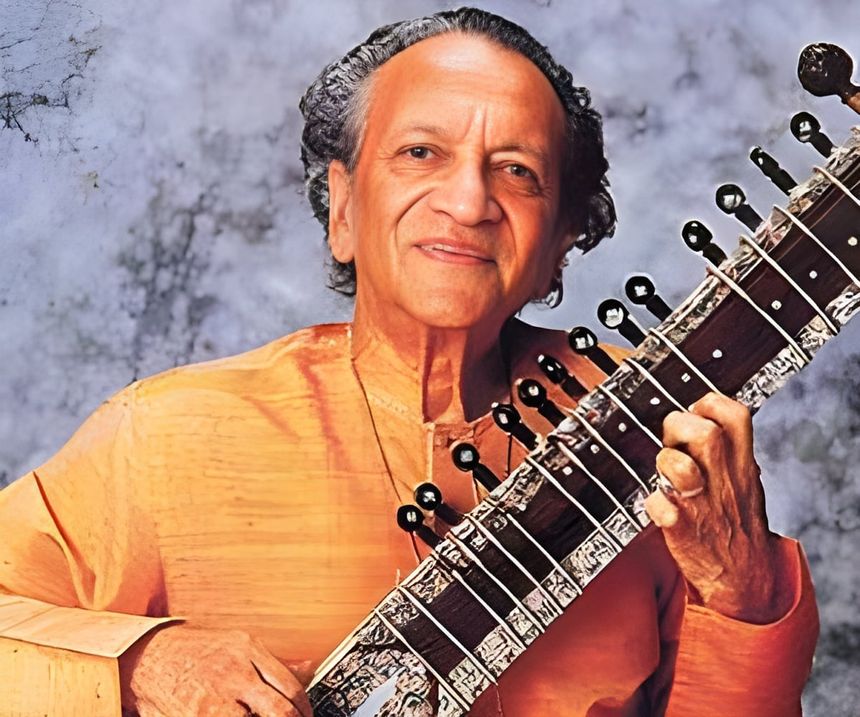
I was listening to the radio the other day and a programme came on about Ravi Shankar
An Indian sitarist and composer, and for many in the West, the man best known for teaching George Harrison (of the Beatles) how to play the sitar
That one, generous act opened a cultural door
It introduced Indian classical music to Western audiences who might never otherwise have heard it
It took me straight back
My father was a sound engineer at the BBC, working at the newly opened, state-of-the-art TV studios called Pebble Mill in Birmingham. In the 1970s there were only three television channels in the UK, and the output was, how shall I put it, very “white”
It didn’t reflect the reality of a country that was becoming increasingly multicultural, with growing Indian, Pakistani and Bangladeshi communities
So when volunteers were asked to help create new programmes for these audiences, my dad put his hand up to do the sound
He loved it
There was nothing he enjoyed more than solving the challenges of mic-ing up Indian classical instruments properly
Getting the placement right
Respecting the sound
Letting the music breathe
He would bring the reel-to-reel tapes home, and our house would fill with Indian classical music
Sounds that were completely different to anything else on the radio at the time
I still have one of those tapes. Shivkumar Sharma on the santoor, accompanied by Ahmed Jan Thirakwa on tabla and Varatha Luxmie on tanpura
A moment in time, captured on tape
Through that work, Dad collaborated with Ravi Shankar, and as a result, both he and my mother were invited to Ravi Shankar’s 50th birthday party
It was held at Pebble Mill, in one of the TV studios
Not a bad venue for a celebration of music and culture
Dad also went on to work with Madhur Jaffrey, long before many people in the UK knew her name
She would later be recognised for bringing Indian cuisine to the Western world through her debut cookbook, An Invitation to Indian Cooking in 1973
Conclusion
Looking back, it strikes me how quietly important all of this was
A sound engineer volunteering his time
A musician sharing his art
A broadcaster creating space for voices and cultures that weren’t being heard
Cultural change doesn’t always arrive with a bang
Sometimes it comes via a reel-to-reel tape, a carefully placed microphone, and a living room filled with music that broadens your world forever
/Passle/59673246b00e801d00aac5ae/MediaLibrary/Images/2026-10-15-17-41-08-439-6ad11034df7274b811726ed6.JPG)
/Passle/59673246b00e801d00aac5ae/MediaLibrary/Images/2026-10-15-17-11-17-060-6ad10935b549917dc80130f5.jpeg)
/Passle/59673246b00e801d00aac5ae/MediaLibrary/Images/2026-10-05-17-46-02-328-6ac3e25a9419104bcb84896c.png)
/Passle/59673246b00e801d00aac5ae/MediaLibrary/Images/2026-10-15-15-05-49-595-6ad0ebcdaa6596dee349f7e9.jpeg)