


The Japanese macaque (Macaca fuscata), often called the “snow monkey,” is a species of Old World monkey found only in Japan
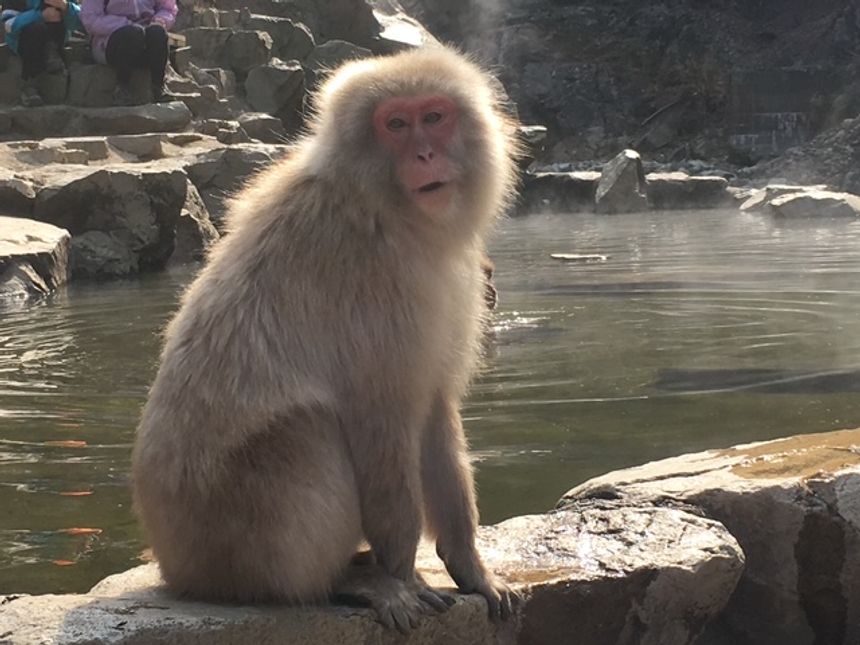
With their thick, brownish-grey fur, short tails, and distinctive pinkish-red faces (and rumps), these creatures are built for life in cold climates
Because some populations live far north and endure months of snow each year, they are the most northerly-living non-human primates in the world
Where We Spotted Them
We saw these fascinating animals in Yamanouchi, in the Japanese Alps, part of the broader region surrounding Shiga Highlands, known for being one of Japan’s largest ski-resort areas
Although Yamanouchi lies in a mountainous, snow-prone region, it's also near the famous Jigokudani Monkey Park, a valley where wild snow monkeys gather to soak in natural hot springs
Their Behaviour — Playful, Adaptable, Surprisingly Human
We observed them with a real sense of humour: every time I took a photo, many turned around and cheekily showed their backside, as if they were posing
This playful behaviour mirrors how others describe snow monkeys’ human-like expressions and social cues
During winter, it’s common to see them lounging in steamy hot springs, the rising vapor blending with falling snow, offering them warmth and comfort
Interestingly, their ability to survive in harsh climates is aided by thickening fur: in colder areas their coats grow denser, enabling them to endure temperatures as low as –20°C
Also worth noting: their diet is highly adaptable. In one mountainous area of the Japanese Alps, a scientific study found that during winter, when plants are scarce, they even eat freshwater organisms like fish and river invertebrates to survive
Why Their Hot-Spring Habit is Special
The snow monkeys’ behaviour of bathing in hot springs seems almost meditative
Research suggests that beyond staying warm, soaking in thermal waters helps them reduce stress during the freezing months
Their hot-spring-soaking behaviour is relatively rare among primates, in fact, the monkeys in Jigokudani are famously “the only monkeys in the world known to enjoy soaking in hot springs.”
Conclusion
Encountering the Japanese macaques in the snow-dusted forests of Yamanouchi, especially as they relaxed in steaming springs, turned to cheekily pose for cameras, or simply lounged serenely, is a reminder of the rich adaptability of wildlife
These snow monkeys combine resilience with a delightful, almost human-like charm: they survive subzero winters, adapt their diet to scarce winter resources, and yet seem to find warmth, comfort, and even humour in their daily lives
They are a living testament to nature’s ability to thrive in extremes and to find joy even when the world around them turns white
/Passle/59673246b00e801d00aac5ae/MediaLibrary/Images/2026-09-14-09-15-43-775-6aa7bb3f162ac4d6485e2cb5.jpeg)
/Passle/59673246b00e801d00aac5ae/MediaLibrary/Images/2026-09-09-16-41-51-918-6aa18c4fcb257a5875b933c8.jpeg)
/Passle/59673246b00e801d00aac5ae/MediaLibrary/Images/2026-09-09-16-20-21-740-6aa18745c3195dbb894b9b84.jpeg)
/Passle/59673246b00e801d00aac5ae/MediaLibrary/Images/2026-09-11-09-17-21-966-6aa3c721a309dcf7376da3bd.jpeg)