


In a recent post by Theo Lau, she points out that
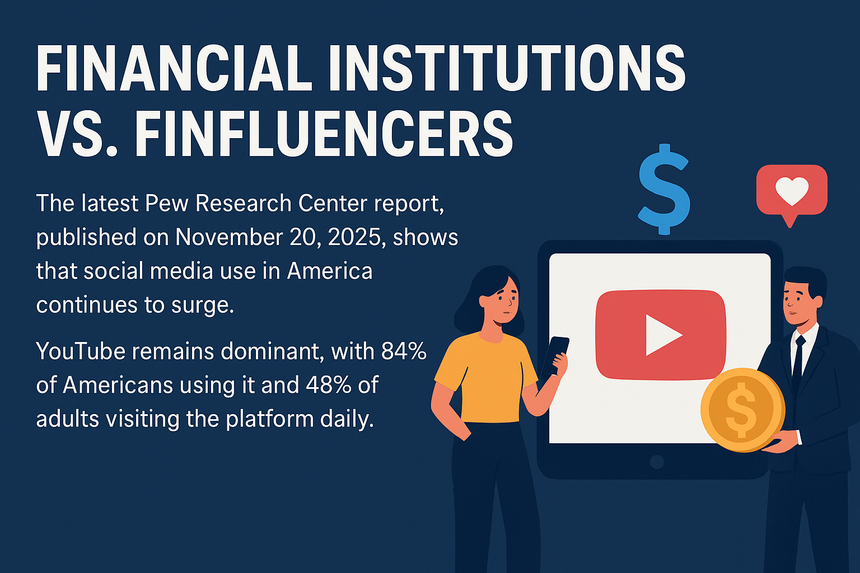
The latest Pew Research Center report, published in November 2025, shows that social media use in America continues to surge
YouTube remains dominant, with 84% of Americans using it and 48% of adults visiting the platform daily
Even among those 65 and older, 27% are daily users
TikTok’s reach has nearly doubled since 2021, growing from 21% to 37% of adults
Theo then combined this with the August J.D. Power report, which highlights that more Americans are turning to social media and AI for financial guidance, and it’s clear that the landscape for financial education is changing rapidly
Theo points out that, YouTube and other social platforms are no longer just spaces for entertainment; they are where people learn
So where do we find out about financial services products, Theo points out that currently, financial education on these platforms is being driven by finfluencers and independent creators not traditional financial institutions
Theo raises the challenge for financial institutions, is no longer just competing with other firms
The real competition is with accessible, relatable voices that have built trust and influence in areas institutions may have overlooked
Theo recommends a shift by brands:
✅ Rethink content: Focus on educational value over polished promotions. Drop the corporate jargon
✅ Be where people learn: Show up authentically on the platforms your audience uses, not where you wish they would
The question for financial institutions is simple: Are you willing to meet your customers and future customers in the spaces where they are learning and making financial decisions or risk being left behind?
Conclusion: In the era of finfluencers and social media learning, authenticity, accessibility, and educational value are the currency of trust
Institutions that fail to adapt risk losing relevance in a world where learning happens online, not in corporate boardrooms
Thank you to Theo for being the inspiration for this blog
/Passle/59673246b00e801d00aac5ae/MediaLibrary/Images/2026-09-14-09-15-43-775-6aa7bb3f162ac4d6485e2cb5.jpeg)
/Passle/59673246b00e801d00aac5ae/MediaLibrary/Images/2026-09-09-16-41-51-918-6aa18c4fcb257a5875b933c8.jpeg)
/Passle/59673246b00e801d00aac5ae/MediaLibrary/Images/2026-09-09-16-20-21-740-6aa18745c3195dbb894b9b84.jpeg)
/Passle/59673246b00e801d00aac5ae/MediaLibrary/Images/2026-09-11-09-17-21-966-6aa3c721a309dcf7376da3bd.jpeg)