


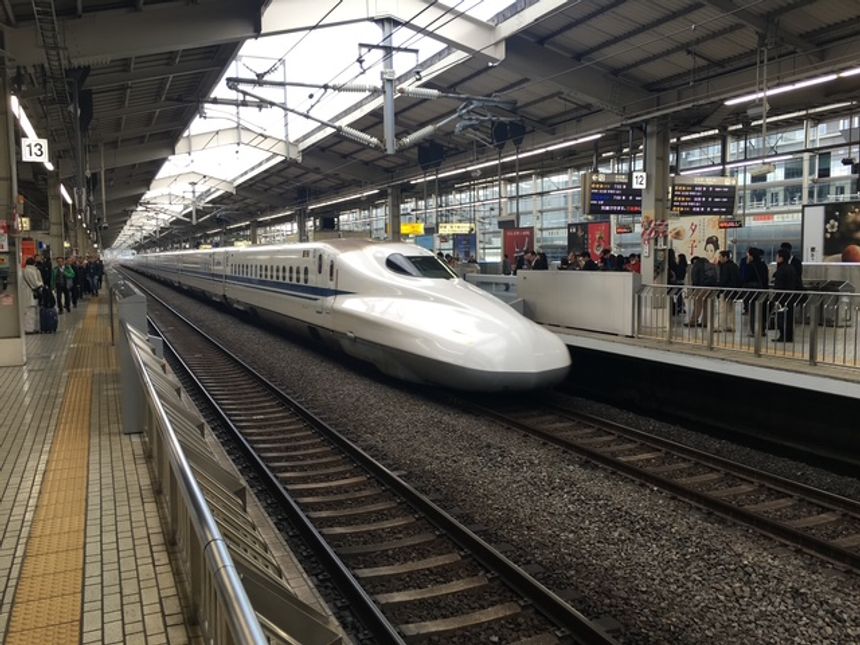
Riding the Shinkansen, Japan’s famous bullet train, is an experience that combines precision, efficiency, and understated elegance
When the Japanese built the bullet train, there was no legacy infrastructure to work around, they could plan the track from scratch
The lines were laid in near-perfect straight paths. Citizens saw it as a patriotic duty to allow the tracks to pass through their property, all in service of connecting Japan’s outlying regions with Tokyo
Today, the Shinkansen network stretches over 2,951 kilometers (1,833 miles), reaching speeds of 260–320 km/h
Every detail of the train enhances passenger experience: seats can rotate to face the direction of travel or towards fellow travellers, making group journeys more enjoyable
At the end of each trip, staff meticulously clean the carriages and reset every seat forward, ready for the next passengers
Even small gestures reflect a culture of respect and precision; train guards bow to each carriage before moving on, embodying the thoughtfulness embedded in the system
We flew into Tokyo and then got a short flight to Osaka, travelling afterwards to Hiroshima and back to Tokyo on the bullet train
I have to admit that starting in Osaka was probably a great bet, to allow us to get used to Japanese culture before hitting the city that is Tokyo
Conclusion:
The Shinkansen is more than a high-speed train; it’s a reflection of Japan’s philosophy: combining technological innovation with respect, efficiency, and attention to detail
Every element, from the track design to the bowing guards, demonstrates how infrastructure can be both functional and profoundly human
/Passle/59673246b00e801d00aac5ae/MediaLibrary/Images/2026-10-15-17-41-08-439-6ad11034df7274b811726ed6.JPG)
/Passle/59673246b00e801d00aac5ae/MediaLibrary/Images/2026-10-15-17-11-17-060-6ad10935b549917dc80130f5.jpeg)
/Passle/59673246b00e801d00aac5ae/MediaLibrary/Images/2026-10-05-17-46-02-328-6ac3e25a9419104bcb84896c.png)
/Passle/59673246b00e801d00aac5ae/MediaLibrary/Images/2026-10-15-15-05-49-595-6ad0ebcdaa6596dee349f7e9.jpeg)