


The recent news of a hantavirus outbreak aboard the Dutch vessel MV Hondius struck a chord with me, immediately transporting me back to my own maiden voyage into the Southern Ocean. Our journey began in Ushuaia, Argentina, the “End of the World”, on a ship remarkably similar to the Hondius. From that southernmost tip of South America, we charted a course past breathtaking, crystalline glaciers toward the rugged coastlines of Chile
A City of Long Shadows
Ushuaia is a place where history feels remarkably heavy. Even during my visit in 2008, the scars of the Falklands War remained visible in the local psyche. Our guides were explicit: refrain from speaking English while in town. The tension dates back to May 2, 1982, when the British nuclear submarine HMS Conqueror sank the Argentine cruiser ARA General Belgrano. That single event resulted in the loss of 323 Argentine sailors and remains a point of deep national mourning. However, as is often the case with travel, the reality on the ground was more nuanced. We found that as long as we were polite and contributed to the local economy, the "raw memories" didn't translate into hostility
Contrast in Experience
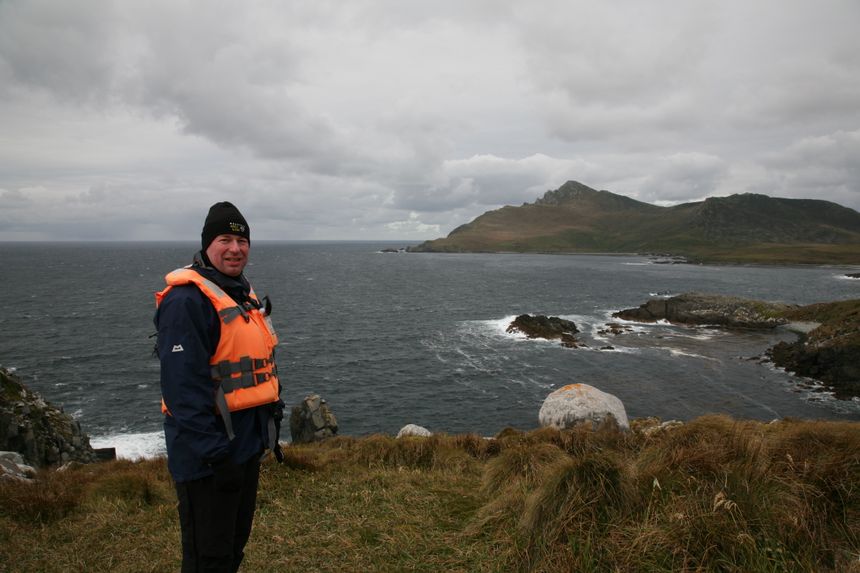
Looking back through my extensive collection of photos, that cruise remains a high point in my life, a truly "awesome" journey defined by serene landscapes and perfect health. Unlike the current headlines, I don’t recall a single passenger falling ill
The situation on the MV Hondius today is a stark contrast, and the suspected cause is surprisingly grounded. According to the BBC, investigators are looking toward a local landfill on the outskirts of Ushuaia. It is a popular, albeit unconventional, spot for tourists to go birdwatching. Unfortunately, where there is waste, there are rodents; the leading hypothesis among Argentinian officials is that a passenger may have contracted the virus from the rats and mice frequenting that site
Conclusion
The allure of the Antarctic and the Patagonian fjords remains as strong as ever, but these recent events serve as a poignant reminder that travel is never just about the scenery. It is a complex tapestry of geopolitical history and biological risks. Whether navigating the lingering tensions of a decades-old war or the invisible threat of a modern virus, the "End of the World" demands a deep respect for both its past and its environment
/Passle/59673246b00e801d00aac5ae/MediaLibrary/Images/2026-08-24-11-17-48-902-6a8c285cd8616da8f81efa01.jpeg)
/Passle/59673246b00e801d00aac5ae/MediaLibrary/Images/2026-08-17-15-50-42-299-6a832dd2aa19cd802107190a.JPG)
/Passle/59673246b00e801d00aac5ae/MediaLibrary/Images/2026-08-18-11-00-58-087-6a843b6a6b762d12f8b35b63.jpg)
/Passle/59673246b00e801d00aac5ae/MediaLibrary/Images/2026-08-17-14-16-48-387-6a8317d0173edbfbca492869.jpeg)