


The story of my older sister
Introduction: The Shivering Sixties
When we think of the 1960s, we often envision a decade of vibrant revolution, "swinging London," a burst of pop culture, and rapid societal change
But if you were living in the UK at the time, your memories of that era might be tinted by a much colder reality
The 1960s was a period of significantly colder-than-average winters, which had people whispering a terrifying phrase: “The New Ice Age.”
Even in 1979, The Clash sang about it in their song London Calling
“The ice age is comin', the sun's zoomin' in”
The peak of this icy assault arrived on March 29th, 1962
It was a day that perfectly blended chaos and isolation
A severe depression swept across the South of England, unleashing 70 mph gale-force winds and relentless, driving blizzards
In Central London, the city stalled; in nearby Whipsnade, the snow reached a staggering 10 inches
The few people who dared to commute, many still grappling with a Tube Strike around that period, found themselves trapped in an icy gridlock.
When the Cold Hits Home: A Wealdstone Story
But for my family, this day was more than a statistical curiosity or a dramatic news event
It was the day a cold, isolated world closed in on them completely
Just two years prior, in July 1960, my parents had married, optimistic and eager to start their life and start a family
By March 1962, they were living in a small flat in Wealdstone, Northwest London, eagerly awaiting their first child
On that violent, blizzard-ridden Thursday, my mum went into labour, her waters broke while she was at home
In 1962, there was no cordless convenience
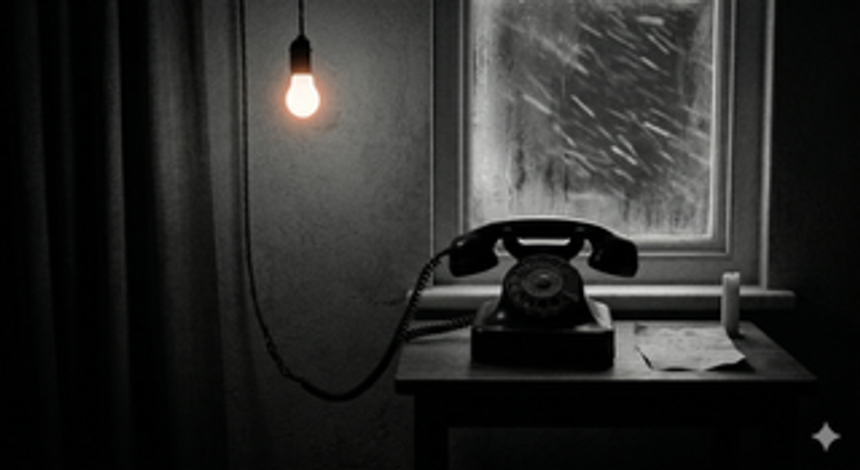
The telephone was a substantial object, a heavy black device tethered to the wall by a coiled cord, a rotary dial clacking and whirring as my father frantically dialed 999 (911)
They called the ambulance
But the storm outside was absolute
The gale-force winds and mounting drifts had paralyzed the roads
The ambulance was not coming.
With the wind howling against the windowpanes, my dad, instructed solely by the crackling, analog voice of the emergency operator down that single wire, was forced to act
He was not a doctor, yet he had to deliver his child
My sister was born that day
Though my parents had names like Ruth or Rachel ready, names I use now, decades later, to find a connection to a sister I never met, to my mum, she is still simply "baby."
The outcome was heartbreaking. It was a nuchal cord, a very common situation where the umbilical cord wraps around the baby's neck
In almost all modern hospital settings, this is a minor complication, easily managed
But in that frozen flat in 1960s Wealdstone, with only a 999 operator and a terrified father, the tragedy was insurmountable
My sister’s ashes were spread in the cemetery of Breakspear Crematorium in Ruislip, a peaceful, sprawling place that, on March 29th, 1962, would have been a landscape of pure, unblemished white
Conclusion
My parents belonged to a generation that didn't complain
There was no counseling, no modern vocabulary for trauma, and no public outpouring of grief
They simply did what they had to do: they endured the winter, and they started again
For decades, this story stayed locked away, a frozen moment in time that we didn't revisit until I was in my twenties
I have come to realize that there are some things so heavy they are simply not talked about, they are just carried
There is also the quiet, bittersweet truth that if this story hadn't ended exactly as it did, I might not be here today
My life grew out of the space she left behind
She remains a part of us, even in the silence
But the storm of March 1962 wasn't the only time my family had to fight for a beginning
/Passle/59673246b00e801d00aac5ae/MediaLibrary/Images/2026-08-11-17-08-47-050-6a7b571f0d2c4701b86791a5.jpg)
/Passle/59673246b00e801d00aac5ae/MediaLibrary/Images/2026-08-11-16-55-55-475-6a7b541b076560dc5fa17c1c.jpg)
/Passle/59673246b00e801d00aac5ae/MediaLibrary/Images/2026-08-11-17-19-35-505-6a7b59a7fa1efd2e757d914a.JPG)
/Passle/59673246b00e801d00aac5ae/MediaLibrary/Images/2026-08-10-15-09-02-118-6a79e98e2f27202fffb36392.jpeg)