


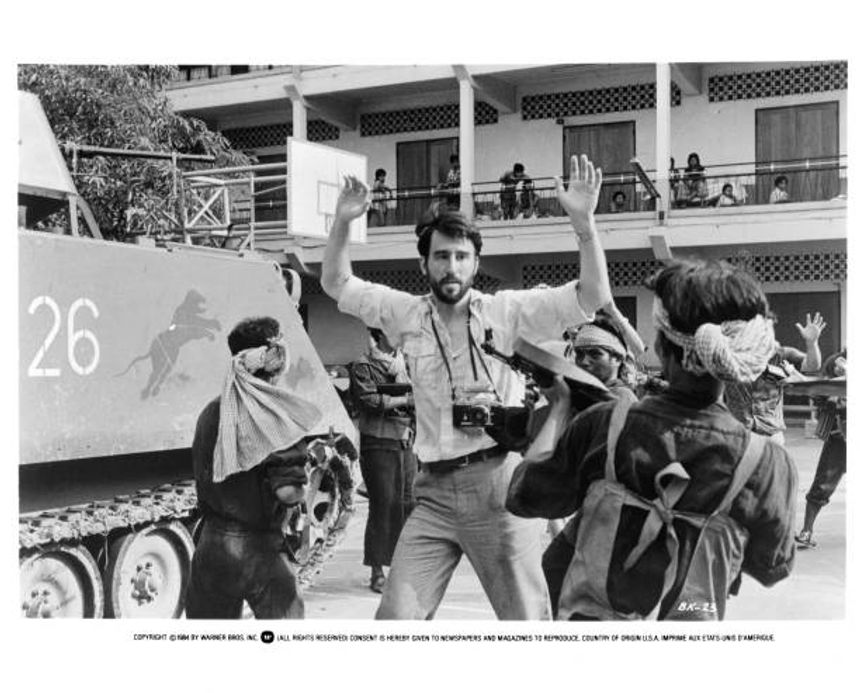
For those of us who grew up with the shadow of the Vietnam and Cambodian wars looming in the background, the 1984 release of The Killing Fields was more than just a movie, it was a visceral awakening
The film’s depiction of the fall of Phnom Penh on April 17, 1975, brought the grim reality of "Year Zero" into sharp focus
Under the leadership of Pol Pot, the Khmer Rouge sought to dismantle modern society entirely to create a pre-industrial, agrarian utopia
To achieve this "classless" vision, they targeted the educated elite and city dwellers, whom they viewed as corrupted by Western capitalism
Their goal was to force every citizen into rural labour, effectively erasing centuries of progress in a heartbeat
Symbols of a Divided Reality
In the cinematic retelling, two locations stand out as anchors for the international press:
Hotel Le Royal (now Raffles Hotel Le Royal): A bastion of colonial elegance that became a final refuge for those watching the city crumble
The Foreign Correspondents' Club (FCC): This iconic spot represented a surreal, insulated bubble where journalists reported on the chaos, juxtaposing the comforts of the press with the brutal reality of the Khmer Rouge takeover just outside the doors
A Personal Encounter with the Past
Visiting Phnom Penh years later offered a sobering perspective on this history
At the time of my visit, the remnants of the Khmer Rouge were still active enough in the countryside that traveling by car or bus was deemed too dangerous for Western tourists due to the risk of kidnapping
We had to fly into Siem Reap to ensure our safety
The most profound moment of the trip, however, came from our local guide
She shared that she had survived the regime by keeping a life-threatening secret: she could speak English. Because the Khmer Rouge viewed any form of education as a "bourgeois" trait punishable by death, her silence was her only shield
Walking through the halls of the Raffles Hotel Le Royal and the FCC wasn't just a sightseeing tour; it was a heavy, quiet encounter with modern history
These buildings stand as silent witnesses to a time when a city was emptied and a culture was pushed to the brink of extinction
Conclusion
The legacy of the Khmer Rouge is not just found in history books or on film screens; it lives on in the stories of the survivors and the preserved architecture of Phnom Penh
Standing in the very places where journalists once watched the world change forever serves as a powerful reminder of Cambodia’s resilience
It is a testament to the human spirit that, despite the horrors of Year Zero, the voices once forced into silence are now free to tell their stories
/Passle/59673246b00e801d00aac5ae/MediaLibrary/Images/2026-08-25-17-15-23-125-6a8dcdabd5120d632a6022e5.jpg)
/Passle/59673246b00e801d00aac5ae/MediaLibrary/Images/2026-08-26-16-59-23-361-6a8f1b6b9358662d787366b4.jpeg)
/Passle/59673246b00e801d00aac5ae/MediaLibrary/Images/2026-08-25-16-58-30-866-6a8dc9b6d5120d632a6015c7.jpeg)
/Passle/59673246b00e801d00aac5ae/MediaLibrary/Images/2026-08-12-14-51-00-758-6a7c8854c7298bb5305c2ab1.jpeg)