


During the Second World War, Britain’s civilian population, particularly those in London, was urged to build air-raid shelters to withstand bombing raids
Among the most widespread designs was the Anderson shelter, created in 1938 by engineers William Paterson and Oscar Carl Kerrison
It was named after Sir John Anderson, the Minister for Home Security, who oversaw its introduction as a low-cost, prefabricated solution that could be installed in ordinary gardens across the country
While other designs, such as the Morrison and Wilmot shelters, were also produced, the Anderson shelter became iconic
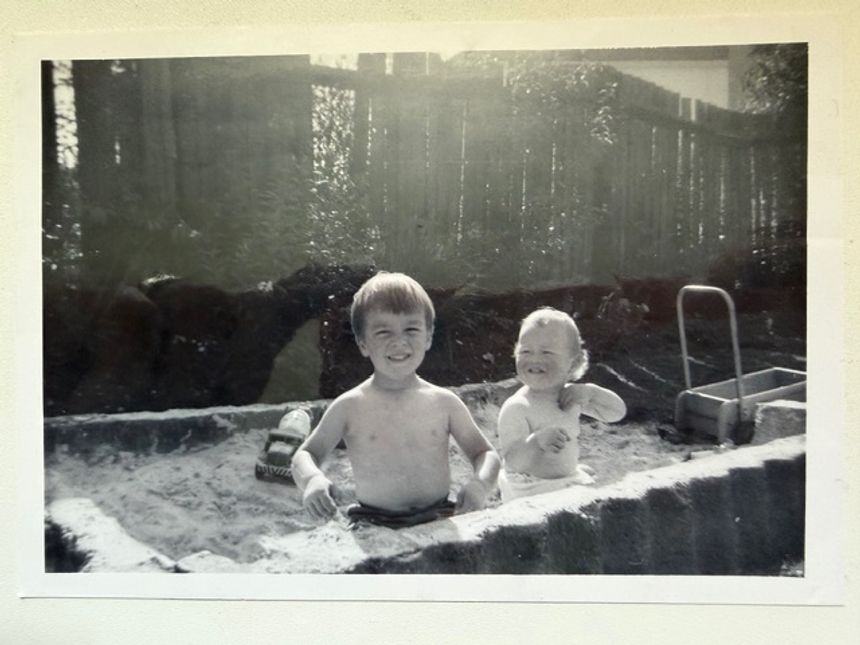
My family had one, or at least the concrete base of one, in our garden in Harrow
By the time my brother and I were growing up, its original purpose had long since faded
For us, it became the perfect sandpit
I still remember the hours we spent playing there, myself on the left in the photograph
And when November came, the shelter base found yet another purpose
It became the heart of our Bonfire Night celebrations, a solid fire pit for 5th November bonfires and fireworks
This was well before today’s large, organised displays; back then, it was families and neighbours gathering together, sparklers in hand, enjoying the warmth of the fire and the crack of fireworks in the cold autumn air
Conclusion
What had once been a symbol of war and survival became, for us, a place of play, laughter, and community
The Anderson shelter reminds me not just of Britain’s resilience during wartime, but also of how families repurposed the remnants of history into something that shaped the simple joys of childhood
/Passle/59673246b00e801d00aac5ae/MediaLibrary/Images/2026-09-15-16-30-26-041-6aa972a25f41e01eabc7b9df.png)
/Passle/59673246b00e801d00aac5ae/MediaLibrary/Images/2026-09-10-17-11-54-346-6aa2e4da1c00dddad49c5123.jpeg)
/Passle/59673246b00e801d00aac5ae/MediaLibrary/Images/2026-09-14-14-02-01-552-6aa7fe5911465f5f72c2d921.png)
/Passle/59673246b00e801d00aac5ae/MediaLibrary/Images/2026-09-14-09-15-43-775-6aa7bb3f162ac4d6485e2cb5.jpeg)