


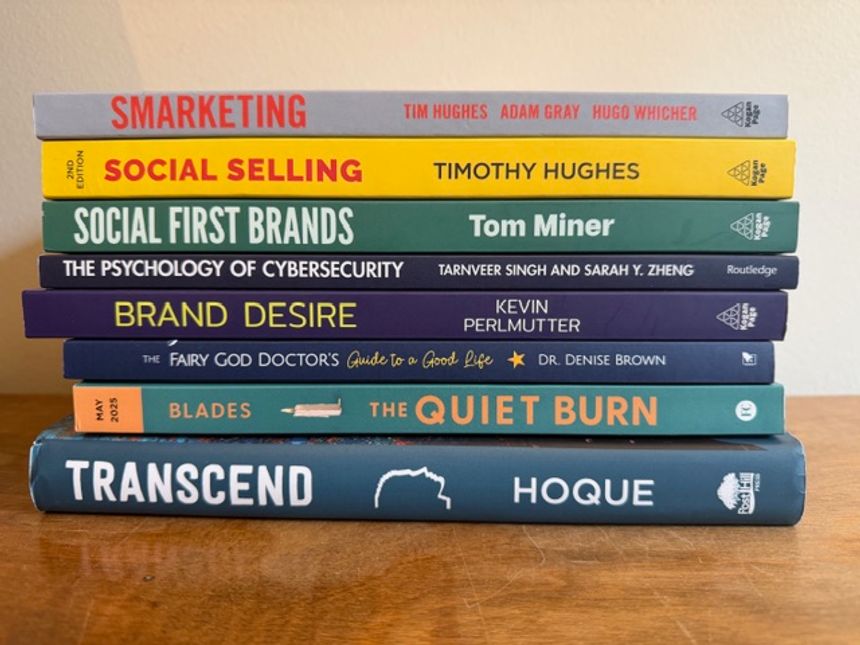
Here is a post of the last 10 business books I've read, hope you enjoy them
Don't forget, if you read a book to leave a review, it really helps us authors

Lynn Blades’ The Quiet Burn is a compassionate and eye-opening guide for ambitious women who find themselves caught between their drive for success and the invisible pressures of society. Blades shines a light on the subtle, often ignored signs of burnout, showing how what feels like “pushing through” is often the body and mind crying out for rest. With honesty and clarity, she unpacks the cultural and workplace expectations that push women to overextend themselves and offers a fresh perspective on how self-worth, rest, and resilience are deeply intertwined.
What makes this book stand out is its blend of practical strategies and heartfelt wisdom. Blades doesn’t just tell women to “slow down”, she provides a roadmap for rewiring ambition, creating healthy boundaries, and prioritizing self-care without guilt. The Quiet Burn is both a warning and an empowering call to action: that thriving requires listening to ourselves before burnout takes hold. For women striving to achieve without sacrificing their health and happiness, this is an essential and timely read.
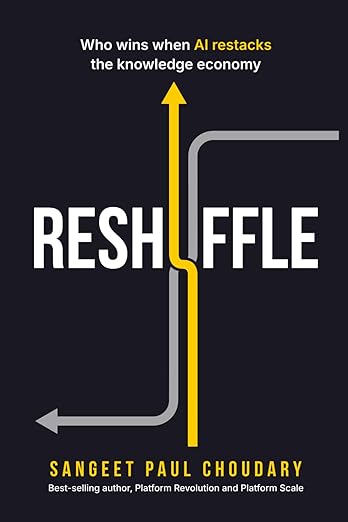
Reshuffle is a sharp, thought-provoking examination of how artificial intelligence is not simply adding efficiencies to the current system but completely restacking the foundations of the knowledge economy. Sangeet Paul Choudary has a gift for connecting history, strategy, and technology, showing why businesses that prepare for AI with old assumptions are building Maginot Lines, defenses that look strong but are destined to fail. His framework for the “new stack” offers both clarity and urgency, making this a book that leaders, policymakers, and entrepreneurs cannot afford to ignore.
What makes the book stand out is its balance between deep analysis and accessible storytelling. Choudary goes beyond the usual hype to reveal who the winners and losers will be in this economic transformation, and what strategic blind spots organizations must overcome if they want to stay relevant. It’s not just another book about AI, it’s a roadmap for navigating a fundamental power shift. Highly recommended for anyone who wants to understand not only what AI is doing, but how it is restructuring the very rules of value creation.

Dr. Denise Brown’s The Fairy God Doctor’s Guide to a Good Life is a refreshing and empowering read that blends medical insight with real-world wisdom for today’s working woman. With warmth and clarity, she tackles the challenges women face in balancing career, health, and personal life, while offering practical “prescriptions” to manage stress, protect wellbeing, and thrive. What makes the book stand out is Dr. Brown’s ability to write with both authority and compassion, you feel as though you’re being guided by a trusted friend who understands the unique pressures of modern working life.
Rather than offering one-size-fits-all advice, Dr. Brown provides tools and mindset shifts that feel achievable, whether it’s reframing self-care, setting boundaries, or recognizing early warning signs of burnout. Her use of the “Fairy God Doctor” persona adds a touch of humor and relatability, making serious topics approachable without losing depth. This is not just a book for women striving to do it all, but also for leaders, colleagues, and families who want to better support them. A thoughtful, uplifting guide that deserves a spot on every working woman’s bookshelf.
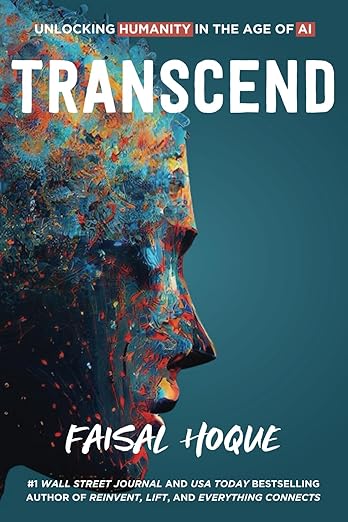
Faisal Hoque’s Transcend is a timely and thought-provoking exploration of how we can retain and even enhance our humanity in an era increasingly dominated by artificial intelligence. Rather than painting AI as either savior or threat, Hoque positions it as a mirror that reflects our deepest values and choices. Through a blend of philosophy, mindfulness, leadership insight, and practical guidance, he challenges readers to move beyond fear and hype and instead consider how technology can serve creativity, empathy, and ethical decision-making. The book is as much about personal growth as it is about organizational leadership, making it accessible to professionals, entrepreneurs, and anyone curious about the human–AI balance.
What makes Transcend stand out is its emphasis on the intersection of technology and timeless human qualities. Hoque skillfully weaves together stories, research, and frameworks that encourage readers to lead with mindfulness, emotional intelligence, and ethics, traits that no algorithm can replicate. While some readers may wish for more technical detail about AI itself, the strength of this book lies in its human-centered lens. In a world where headlines often focus on automation replacing people, Transcend offers a refreshing reminder that our greatest advantage lies not in competing with machines, but in unlocking what makes us uniquely human.
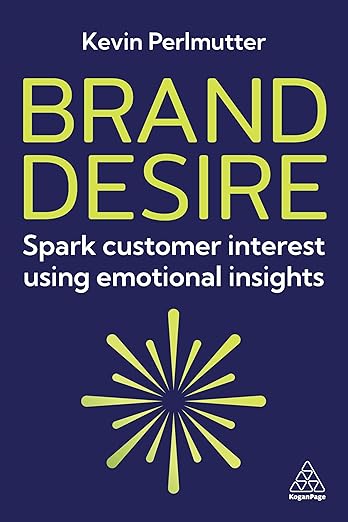
Brand Desire is a refreshing and insightful guide for anyone who wants to understand how brands can move beyond transactions to create genuine emotional connections with customers. Kevin Perlmutter makes a compelling case that most companies only scratch the surface when it comes to customer focus. Through clear frameworks and engaging examples, he demonstrates how emotional insights, not just data or demographics, are the real drivers of customer loyalty and brand preference. The book is both practical and thought-provoking, bridging the gap between marketing theory and actionable strategies that can be applied by businesses of any size.
What sets this book apart is Perlmutter’s ability to humanize branding. He doesn’t just talk about logos or campaigns, he dives into the psychology of desire and shows how tapping into emotions can transform the way customers perceive and engage with a brand. The writing is accessible, the insights are backed by science and real-world cases, and the advice feels immediately usable. Whether you’re a business leader, marketer, or entrepreneur, Brand Desire offers a powerful roadmap for standing out in a noisy marketplace and creating brands that people truly want. I have to admit this book changed my life, I now look at brand "taglines" completely differently and can see which companies are customer focused and which companies are not and inward focused.

Sarah Zheng and Tarnveer Singh's The Psychology of Cybersecurity: Hacking and the Human Mind is a fascinating deep dive into the often-overlooked human side of cyber risk. Rather than focusing on firewalls, encryption, or technical jargon, Zheng and Singh explores the vulnerabilities hardwired into our brains; cognitive biases, emotional triggers, and trust mechanisms, that hackers exploit with precision. Their writing is crisp and engaging, blending psychology, case studies, and real-world examples that make the subject matter both accessible and compelling.
What sets this book apart is its practicality. Zheng and Singh doesn’t just diagnose the problem; they offer actionable strategies for individuals and organizations to strengthen their “human firewall.” Whether you’re a business leader, security professional, or just someone who wants to be smarter about digital threats, this book gives you the insight to understand why attacks work, and the tools to resist them. An essential read for anyone serious about cybersecurity in an age where the biggest threat isn’t the code, but the click.

Primal Dating is a refreshingly unflinching exploration of why we love, lust, and choose the partners we do, through the lens of evolutionary psychology. Tim Ash and Limor Gottlieb strip away the fluff of modern dating advice and gets to the core of what really drives our behavior. From attraction triggers to gender dynamics, they weave together research, storytelling, and practical insights that make you stop and reconsider everything you thought you knew about relationships.
What I loved most about this book is its blend of science and practicality. Tim and Limor don't just explain the “why” behind our primal instincts, they gives actionable advice on how to work with them to create healthier, more fulfilling relationships. Whether you’re single, dating, or in a long-term partnership, this book will challenge your assumptions, spark self-reflection, and leave you better equipped to navigate love in today’s world. A must-read for anyone serious about understanding the psychology of connection.
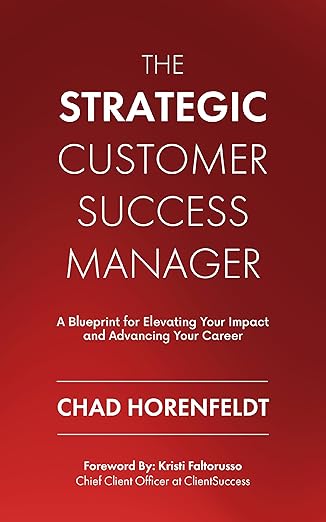
The Strategic Customer Success Manager by Chad Horenfeldt is a practical and inspiring guide for anyone working in Customer Success who wants to go beyond reactive problem-solving and become a true strategic partner. Horenfeldt combines years of hands-on experience with a clear, actionable framework that helps CSMs elevate their impact. The book is well-structured and easy to follow, with real-world examples that make the advice immediately applicable. Whether you’re new to Customer Success or an experienced CSM looking to advance your career, this book shows you exactly how to add value for your customers and your company.
What makes this book stand out is its focus on both personal and professional growth. Horenfeldt doesn’t just talk about processes and metrics; he emphasizes the mindset shift needed to step into a strategic role. His insights on building internal influence, becoming a trusted advisor, and measuring success go beyond theory and give readers a blueprint they can put into practice right away. This is an essential read for anyone serious about driving customer outcomes, building a long-term career in CS, and positioning themselves as indispensable to their organization.
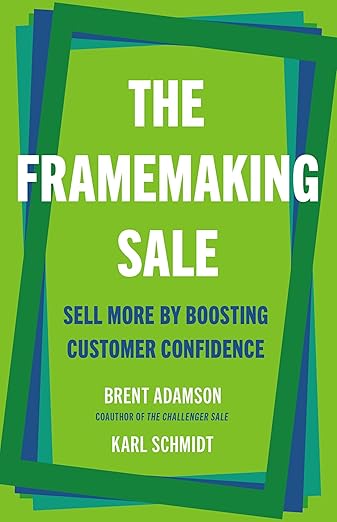
The Framemaking Sale is a must-read for anyone in B2B sales, marketing, or leadership who feels frustrated by stalled deals and indecisive buyers. Brent Adamson and Karl Schmidt take the insights they pioneered with The Challenger Sale and push them further, showing that today’s biggest sales challenge isn’t competitor differentiation, it’s customer hesitation. The book introduces the concept of “framemaking,” a practical approach to helping customers make sense of their options and move forward with confidence. Rather than teaching reps to pitch harder or create more content, Adamson and Schmidt teach them to clarify, guide, and instill decision certainty.
What sets this book apart is its blend of deep research, engaging storytelling, and actionable steps. The authors share real-world examples of companies that have implemented framemaking to shorten sales cycles and win more deals. The writing is crisp, accessible, and immediately applicable, you’ll come away with concrete techniques to use in your next customer conversation. If you want to boost win rates, reduce buyer indecision, and become a trusted guide in the buying journey, The Framemaking Sale belongs on your desk.
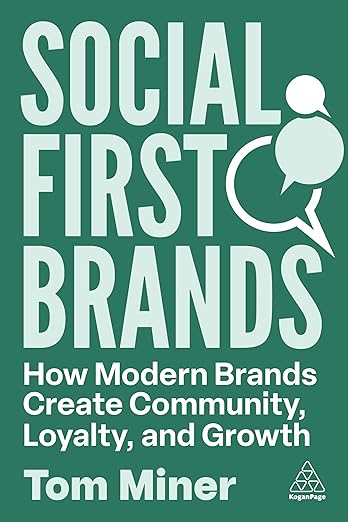
Social First Brands is a refreshing and timely exploration of how modern businesses can no longer afford to treat social media as a side channel. Tom Miner argues convincingly that being “social-first” isn’t about posting more content, it’s about shifting mindset, putting community and connection at the heart of your brand strategy. With clear frameworks and compelling examples, Miner shows how loyalty today is earned not through flashy campaigns, but through consistent, authentic engagement that turns customers into advocates.
What makes this book stand out is its practical balance of strategy and action. Miner doesn’t just highlight success stories, he also warns of the common pitfalls brands fall into when they mistake broadcasting for community building. The writing is engaging, the insights are grounded in real-world practice, and the takeaways are immediately applicable whether you’re leading a global brand or growing a startup. If you want your business to thrive in a world where community drives growth, Social First Brands is an essential read.
And now a little bit about my books ....

I wrote the first edition of "social selling - techniques to influence buyers and changemakers - 1st edition" (the one with the white cover) back in 2015 and it was published in 2016. It was the first book on social selling to be published. With so many changes that have taken place in social media over time, when Kogan Page, my publisher, approached me and asked for a second edition (the one with the yellow cover), I agreed.
This second edition, has been totally updated from 187 pages to 306. I explain how the world of business has changed with digital and how that impacts the modern buyer and it's a business imperative that we change our sales and marketing.
Many people often think that social selling is some sort of future state. It's not, it's the here and now. DLA Ignite, my company, for example, has clients doing $multi-million deals using social media. If your not doing $multi-million deals on social, your competition are and you are losing market share and revenue.
With this book, I contacted people I knew that were using social media to drive revenue and got them to tell their story. Chris Fleming the CEO of Cyberhawk, shares how he transformed his business to social and digital 3 years ago. Putting that another way, if you haven't transformed to a social selling methodology by now, you are 3 years behind the market.

In my second book, "Smarketing - How to achieve competitive advantage through blended sales and marketing" published through Kogan Page, we looked at the age old problem of marketing and sales working together. At the time there was a lot of conversations on social media about how on earth do we get sales and marketing to be one team?
The book, takes a case study, which we cannot mention, it works through the strategy, how to implement a program to implement sales and marketing, the political risks and measures and governance. The book finishes with a look into the future of sales and marketing.
I would admit that if we wrote the book today, we would probably call it Rev-ops (revenue operations).
Please note that some reviews (but not all) I had Chat GPT or Google's Gemini to help me
/Passle/59673246b00e801d00aac5ae/MediaLibrary/Images/2026-09-15-16-30-26-041-6aa972a25f41e01eabc7b9df.png)
/Passle/59673246b00e801d00aac5ae/MediaLibrary/Images/2026-09-10-17-11-54-346-6aa2e4da1c00dddad49c5123.jpeg)
/Passle/59673246b00e801d00aac5ae/MediaLibrary/Images/2026-09-14-14-02-01-552-6aa7fe5911465f5f72c2d921.png)
/Passle/59673246b00e801d00aac5ae/MediaLibrary/Images/2026-09-14-09-15-43-775-6aa7bb3f162ac4d6485e2cb5.jpeg)