


My father had Lewy body dementia (LBD), it's a progressive neurological disorder that affects thinking, movement, behavior, and sleep
Robin Williams the US comedian, died of LBD
It's characterized by the abnormal buildup of proteins called Lewy bodies in the brain
Think of it as this, there are proteins floating in the brain and different days they land in different ways
Today he may be deaf, tomorrow he can hear fine, but is blind
For his carer, this is added stress as the patient is seen as being “difficult”
We would visit and he would say he couldn't walk and mum would accuse him because he had been able to walk all week …. it's those damn proteins
Our expectations, as first world, “normal people” is that everything remains the same
They don't
Plus, our first world expectations is also that things get better
If I get flu and I'm rough for a few days, but I get better, as you get older you don't
With LBD also comes compulsive behaviour, there are many families who have found a parent has secretly gambled the house away
My Dad's compulsion is a story for another day
Lucky, Dad wasn't a wanderer, which is often the stories you hear
People keep coming around to your house and asking for the same thing, time and time again
Dad also had Parkinson's disease, people often think that this is to do with the shakes, it can be
One friend of ours has had Parkinson's and his hands have shaken for over 20 years
(Can you imagine that?)
Dad, had below the belt Parkinson's, which meant he shuffled when he walked, in fact people thought he was drunk
Billy Connolly, the Scottish comedian has this condition
The Dementia, built up over 12 years, and during that time we would see “the lights going out”
First, while on holiday, he admitted that he had forgotten how to swim
Then, on another holiday, he had a massive argument with my mum
She was driving, he was map reading and they got lost
He then admitted that he had forgotten how to read a map
This was the great man that had taught me how to read a map before any of my friends at school
Julie thinks it's funny that if we drive to France or Spain, I insist on using a map as I like the challenge of map reading and it connects me with my parents
All that time, during those 12 years of decline, you could still have a conversation with my Dad
Sometimes he was bright other times he got lost in thoughts
This was the man that always won at the Trivial Pursuits board game
How the proteins landed that day I guess
How could he not remember that?
From what I have explained above, for any carer this is hard work
My Dad lost his long term memory and my mum would cry
“I asked him about when we were in France and the waitress said “he and his funny little ways”" because when they finished a bottle of wine, Dad would turn the wine bottle upside down in the ice bucket
Which is a big “no no” or “non non” in France
How can he not remember that?
Of course we build up memories with our partners and to lose them, the process of losing part of your body (and mind)
It's hard
At what point do we make the decision to put him in a home?
I agreed with my Mum some conditions as to when it would be the right time to put him in a home
Please don't judge my mum for this
Some people in Pershore (where they live) still cross the road when they see my mum because she didn't look after her husband at home …. true story
I said to mum that the moment Dad becomes incontinent, he was to go in a home
Of course, mum didn't do anything until he was doubly incontinent
He had a gastric infection one weekend
He would 541t himself and hand her his 5h1t stained tracksuit bottoms on a hourly basis
She would have to clean him up
She had the washing machine on everyday, just washing his clothes
Mum couldn't cope, she was going downhill fast
I was in the position that I was going to lose both parents
That's why we put Dad in a home
So what about assisted dying?
Based on what I told you above, there maybe people thinking
Maybe it's time for him to go? I don't agree and I will explain way
Now at this point Dad met the 5 criteria of assisted dying
- An adult (18 or over)
- Having mental capacity
- Being terminally ill with a life expectancy of six months or less,
- Being a resident of England or Wales, and having a clear, settled
- Informed wish to end their life, free from coercion.
Now there is no definition of mental capacity, but I had conversations with him right up to 4 days before his death
He and I had a sing song and laughed to some of his favorite 78 records just days before he died
When we put him into the nursing home he was given 6 months to live, he lived for another 5 and half years
And, if you had spoken to him and said, would you like to end your life he would had said “yes”
Why?
Because he was brought up to be polite and didn't want to be any trouble
I talk to a lot of old people and they all say “I don't want to be a burden”
What happened after we put him in a home?
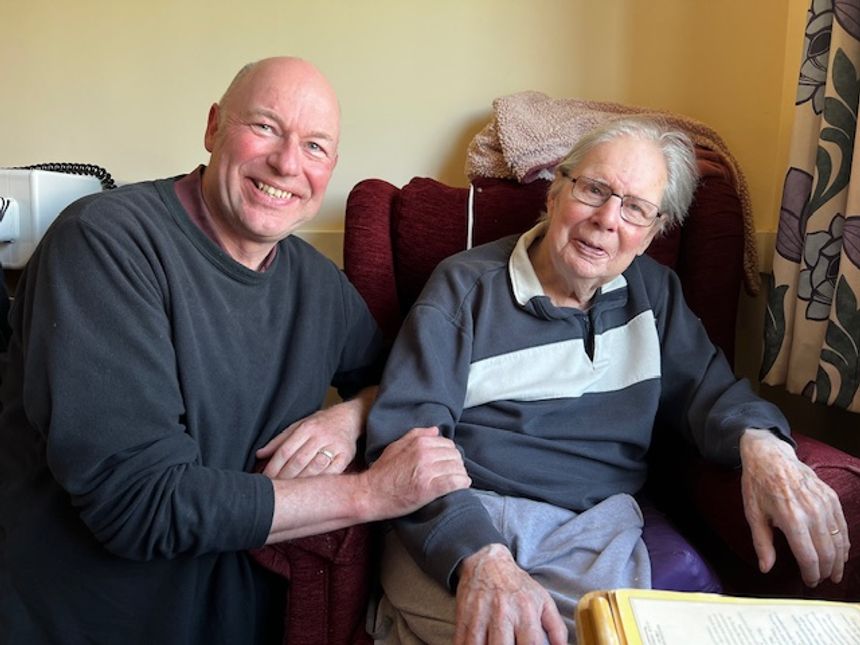
I visited my Dad monthly, (apart from during Covid), for those 5 and half years and we had many a laugh
We were able to tell each other we loved each other
He asked me to forgive him for letting a swarm of bees attack me the day before my exams
I laughed and said of course I did, in fact I don't really remember it, better still I was able to hold his frail hand as i told him
I recall, telling him about going to Vienna to the opera and he asked me “Did you go to Wiener-Staatsoper?”, which is the Vienna state opera, he asked without any hesitation
We had ….. and I described the interior and he smiled as he had been there himself
It would have been wrong to have “manipulated” him into an end of life situation
Maybe we are not that harsh, but with the price of property in this country, a dead parent for many, could be a big pay day
Now I know you would never do that, but my mum when she was a social worker saw many a parent convinced to sign a house over, (to avoid inheritance tax) only for that parent to end up thrown in a home (and forgotten)
While the children lived off the proceeds
I'm just saying that there are people who do see this as a big opportunity for wealth redistribution
In conclusion
Watching my father’s slow decline through Lewy body dementia was both heartbreaking and humbling
It taught me that life doesn’t always follow the patterns we expect, there’s no steady line of improvement, no simple answers, and certainly no guarantees
LBD strips away not just memory and mobility, but dignity, routine, and relationships
And yet, amid all the confusion and frustration, there were still moments of light, shared memories, laughter, music, and love
Dad loved music, right up to the very end, a story for another day
This experience also revealed the uncomfortable truths that often sit unspoken in our society: how we treat those who are vulnerable, the pressure on caregivers, and the quiet ethical dilemmas around end-of-life care
We all want the best for our loved ones, but defining what “the best” means becomes far more complicated when confronted with long-term, degenerative illness
I don’t claim to have all the answers
But I do believe we need more empathy, more understanding, and above all, more open conversation about dementia, about dying, and about what it really means to live well until the end
While I understand there are many who think that assisted dying is a good thing, but I want to share our story and why I think this is a step in the wrong direction
/Passle/59673246b00e801d00aac5ae/MediaLibrary/Images/2026-09-09-16-20-21-740-6aa18745c3195dbb894b9b84.jpeg)
/Passle/59673246b00e801d00aac5ae/MediaLibrary/Images/2026-09-11-09-17-21-966-6aa3c721a309dcf7376da3bd.jpeg)
/Passle/59673246b00e801d00aac5ae/MediaLibrary/Images/2026-09-09-16-19-46-760-6aa18722a063f916f32ddd2c.JPG)
/Passle/59673246b00e801d00aac5ae/MediaLibrary/Images/2026-09-02-17-07-56-955-6a9857ec0e55b70aa9bfe58e.jpeg)