


When people hear my name, they usually associate it with modern sales strategy, modern leadership, and Social Selling, the subject of my groundbreaking book that reshaped how professionals build relationships in a digital-first world.
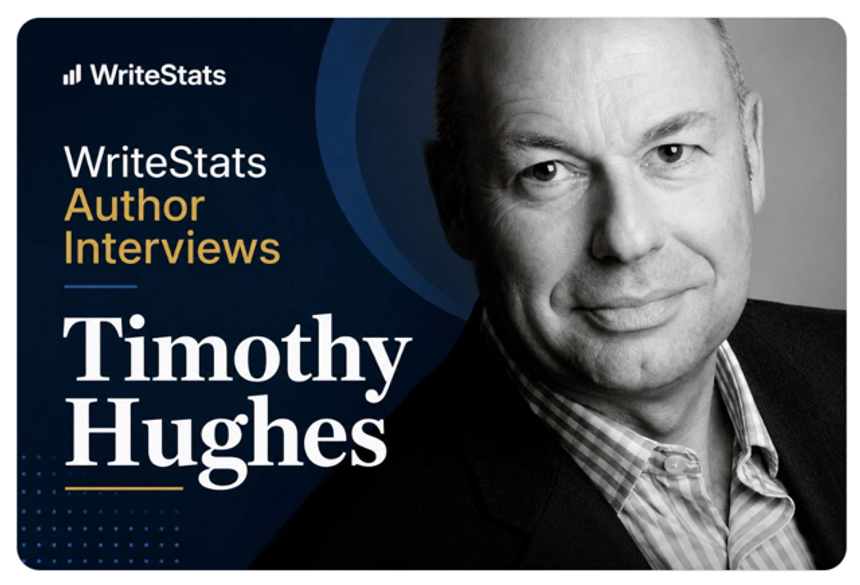
However, in a recent interview feature with WriteStats, I had the chance to step back from the tactical side of sales and reflect on something deeper: my journey as an author, the craft of non-fiction writing, and what it truly means to build a legacy through books.
Writing four books isn’t just about putting words on a page or riding the wave of business trends. It’s about distilling hard-earned experience into ideas that outlast the news cycle.
Here are a few core takeaways from that conversation on writing, technology, and building an author career that stands the test of time.
1. Writing as Legacy Building
"Part of the reason I write is to form a legacy."
Trends in business come and go, but books remain. When I sat down to write, my goal wasn't just to write a manual for today’s algorithm; it was to capture a fundamental shift in human behavior.
Writing non-fiction gives you the unique ability to turn lived professional experience, the trial and error, the big wins, the industry friction, into insights that can guide others long after you’ve left the room. A book becomes a living record of your perspective, offering value to professionals years down the line.
2. Modern Publishing & Choice
Navigating a four-book career means constantly making strategic choices about how to publish. The modern publishing landscape is no longer one-size-fits-all. Whether you choose traditional publishing, hybrid models, or self-publishing, the key is understanding your ultimate goal:
Reach vs. Control: Traditional publishing offers authority and distribution, while self-publishing offers agility and direct access to your audience.
Agility Matters: In fast-moving spaces like modern sales and technology, being able to iterate and publish timely material can be a massive competitive advantage.
An author’s path shouldn't be defined by convention, but by what best serves the reader and the message.
3. AI and the Evolution of the Author's Craft
We can’t talk about non-fiction writing today without addressing Artificial Intelligence. Generative AI is rapidly changing how content is produced, but it also creates a paradox: as generic content becomes easier to create, authentic human experience becomes infinitely more valuable.
AI can aggregate facts, outline chapters, or summarize data, but it cannot duplicate:
Lived Experience: Real stories from the frontlines of business.
Original Opinion: Bold, counter-intuitive perspectives that challenge the status quo.
Human Connection: The emotional resonance that makes a reader say, "This person truly understands my struggle."
Rather than fearing AI, authors should view it as a tool—while leaning double on the unique human insights that AI simply cannot replicate.
The Takeaway: Turn Experience into Impact
Whether you are writing your first business book or your fifth, remember that book sales are only one metric of success. The real measure is impact, the conversations your words spark, the mindsets you shift, and the lasting footprint you leave in your field.
A huge thank you to the team at WriteStats for hosting such a thoughtful interview and taking the time to explore the story behind the books.
/Passle/59673246b00e801d00aac5ae/MediaLibrary/Images/2026-10-12-17-11-55-227-6acd14db6b66afb021ec8bd8.png)
/Passle/59673246b00e801d00aac5ae/MediaLibrary/Images/2026-10-12-17-17-10-357-6acd1616781f08c215988215.jpeg)
/Passle/59673246b00e801d00aac5ae/MediaLibrary/Images/2026-10-14-08-16-43-063-6acf3a6b215a8c2ff54b112c.jpeg)
/Passle/59673246b00e801d00aac5ae/MediaLibrary/Images/2026-10-14-16-48-47-818-6acfb26f944aac193a998bd0.jpeg)