


There is a specific kind of magic tied to old-school British broadcasting. For decades, Sunday afternoons meant settling in with the BBC to listen to Down Your Way. Running all the way from 1946 until 1992, first on the Home Service and later becoming a staple of BBC Radio 4, the show was a gentle, comforting wander through the towns and villages of the UK. It was beautifully simple: visit a local community, chat with the residents, and play their favorite records
Over the years, the show was guided by some of the most iconic voices in radio history:
Richard Dimbleby: The broadcasting giant who put the show on the map in its early days
Franklin Engelmann: The steady, familiar voice who hosted during the show's peak in the 1950s and '60s
Brian Johnston: Affectionately known to millions as "Johnners," he spent 15 years traveling the countryside, bringing his trademark warmth to interviews with everyday people
It was a beloved slice of British life, offering listeners a cozy, nostalgic window into the heart of local communities. But for me, the connection to the show is a little closer to home
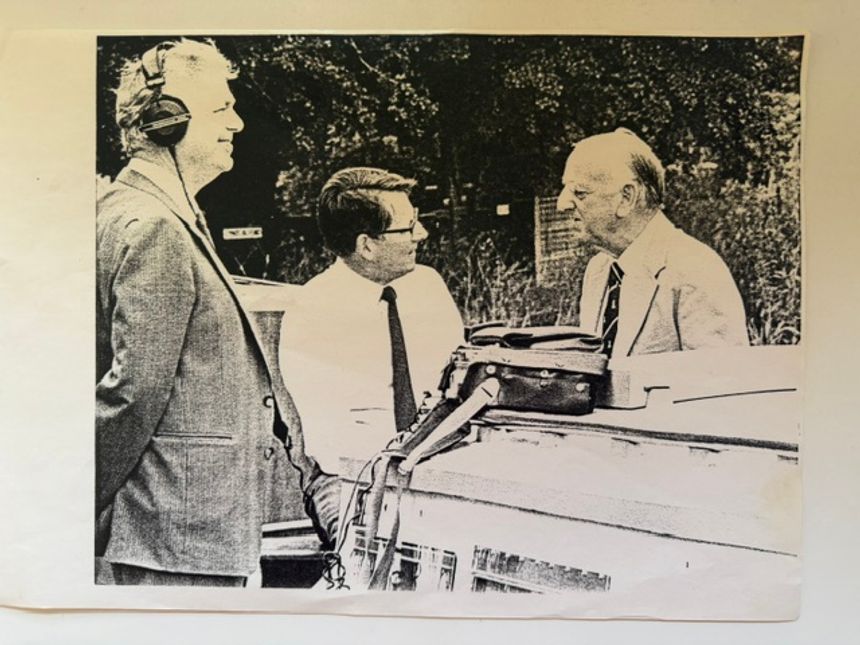
Back in those days, people didn’t often think to take photos of themselves just doing their day job. But recently, while sorting through my dad’s old things, I uncovered an absolute treasure: a photocopy of a photograph showing my dad working the sound for Down Your Way
There he is on the left, looking incredibly dapper, always in a suit, no matter the location, with his headphones, or "cans," resting on his ears. He’s got this wonderful smile on his face, totally absorbed in the moment, listening to the interview spin into his trusty Nagra tape recorder
The Nagra was the absolute mainstay of BBC Outside Broadcasts back then. Seeing him there, capturing history as Johnners chats away with another local guest... well, I truly cannot think of anything more wonderfully, beautifully Radio 4
Conclusion
Finding that photo was a poignant reminder of a gentler era of radio, and a beautiful testament to the quiet craftsmanship that went into making it. My dad wasn't just listening to history, he was helping to capture the living, breathing soundtrack of a nation, one Sunday afternoon at a time
/Passle/59673246b00e801d00aac5ae/MediaLibrary/Images/2026-10-15-15-29-32-477-6ad0f15cd13e4bbdf6a7ce6c.jpeg)
/Passle/59673246b00e801d00aac5ae/MediaLibrary/Images/2026-10-12-17-11-55-227-6acd14db6b66afb021ec8bd8.png)
/Passle/59673246b00e801d00aac5ae/MediaLibrary/Images/2026-10-12-17-17-10-357-6acd1616781f08c215988215.jpeg)
/Passle/59673246b00e801d00aac5ae/MediaLibrary/Images/2026-10-14-08-16-43-063-6acf3a6b215a8c2ff54b112c.jpeg)